


The banker Max M. Warburg founded the Übersee-Club in 1922.
©Max M. Warburg (1867–1956). Oil on canvas. Artist unknown
A brief history of the club
Foundation
The founding meeting of the Übersee-Club took place on 27 June 1922 in the Great Hall of the ‘Patriotic Building’ in Hamburg city centre. This was the period following the First World War. The German economy was in ruins. Germany was struggling to get back on its feet following the territorial cessions and reparations payments to the Allied Powers stipulated in the Treaty of Versailles.
On the site where Hamburg’s town hall had stood for many centuries, a “community of merchants, industrialists, bankers and academics” was to be established “with the long-term aim of rebuilding German economic interests abroad”.
Drawing on the ideas of the banker Max M. Warburg, sections of the Hanseatic middle classes, in the heated atmosphere following the First World War, refocused on what really mattered: objectivity, pragmatism, down-to-earthness, business, and the question of how Hamburg’s international economic relations could be revived following the lost war. To this end, Warburg argued, it was essential “that merchants from a wide variety of countries should have some kind of hub in a commercial city where economic lectures and conferences could be held”.
The club’s primary objective is, as an alliance of business and academia, to work successfully towards ensuring that the business and political sectors act in unison to rebuild the international economy. Its second founding objective is to further develop Hamburg’s traditional links with global markets.
The temporary end
Then, in the early 1930s, it all came to an end. Following the Nazis’ seizure of power in early 1933, a decision was taken in December of that year to dissolve the club, and this was carried out in May 1934. At the time, the club was facing insurmountable financial problems and ceased its activities – partly against the backdrop of the rise of National Socialism, under which a cosmopolitan club life would not have been possible.
Start-up
After the war came a new beginning: the Übersee-Club was re-established by Hamburg merchants in June 1948 – coinciding with the currency reform and with the same objectives as in 1922.
The Übersee-Club’s guiding principle
Combining economic and political action, whilst remaining committed to the promotion of democracy, tolerance and the idea of international understanding: this is what the Übersee-Club stands for.
‘Übersee’ is both a name and a commitment. The club’s founding initiator, Max M. Warburg, once called on us to ‘look beyond the seas with our perspectives and our actions’. In this age of globalisation, this appeal is more relevant than ever. Similarly, the club aims to build bridges with other nations and, in this way, promote understanding between peoples.
The club looks back with pride on a long list of distinguished speakers. Their talks reflect the spirit of their respective eras and the visions of the time. They have chronicled Germany’s reconstruction, borne witness to European unification and accompanied Hamburg’s ongoing development.
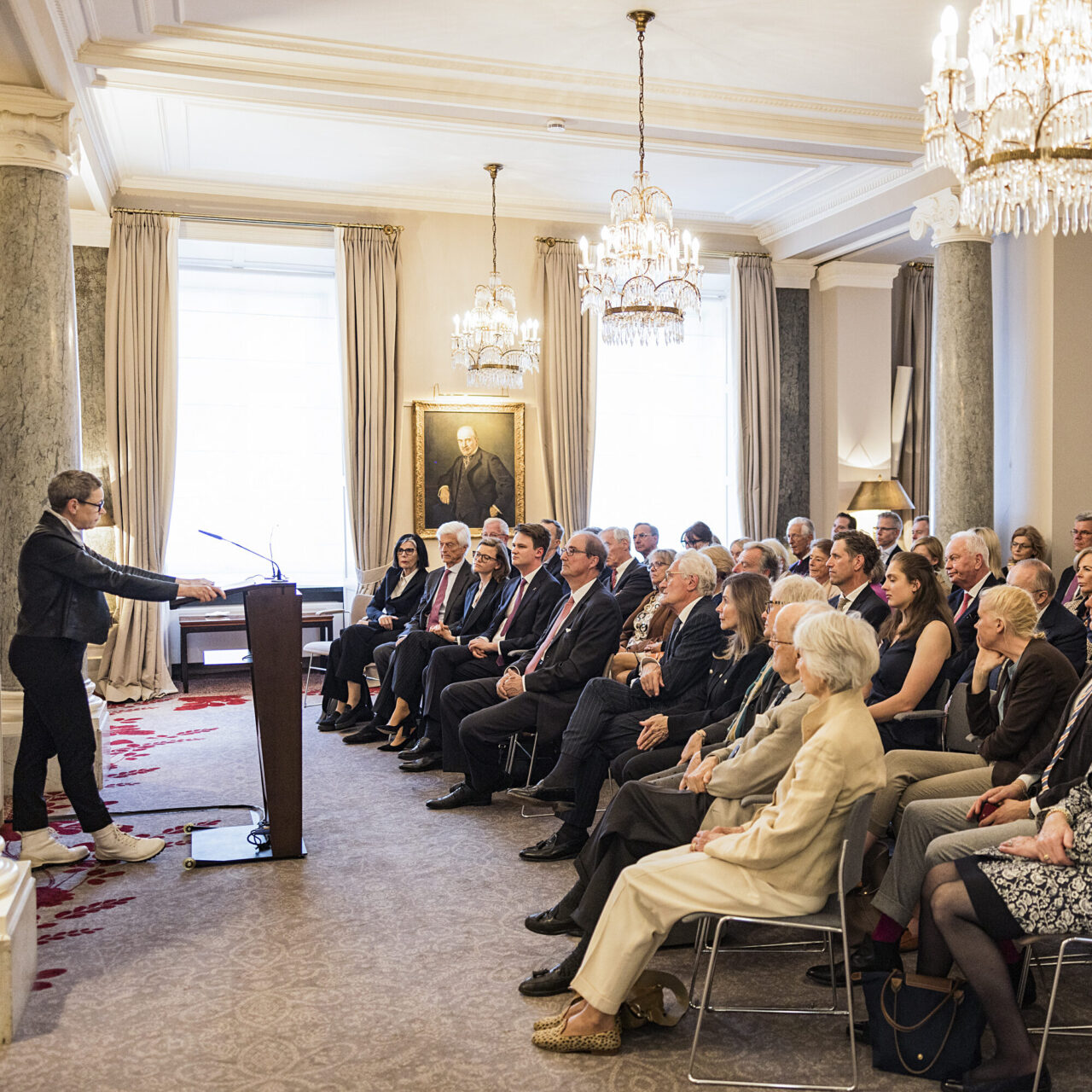
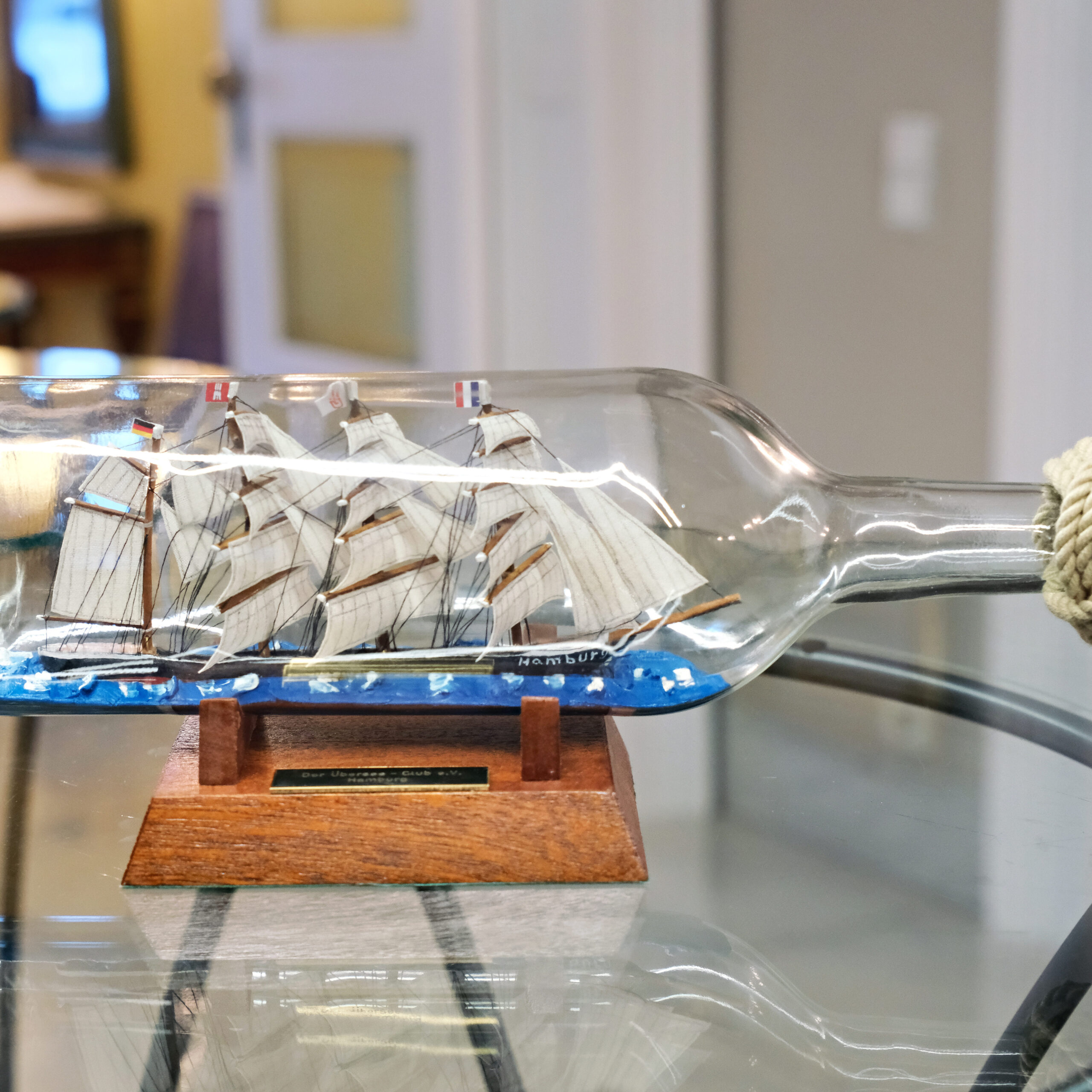
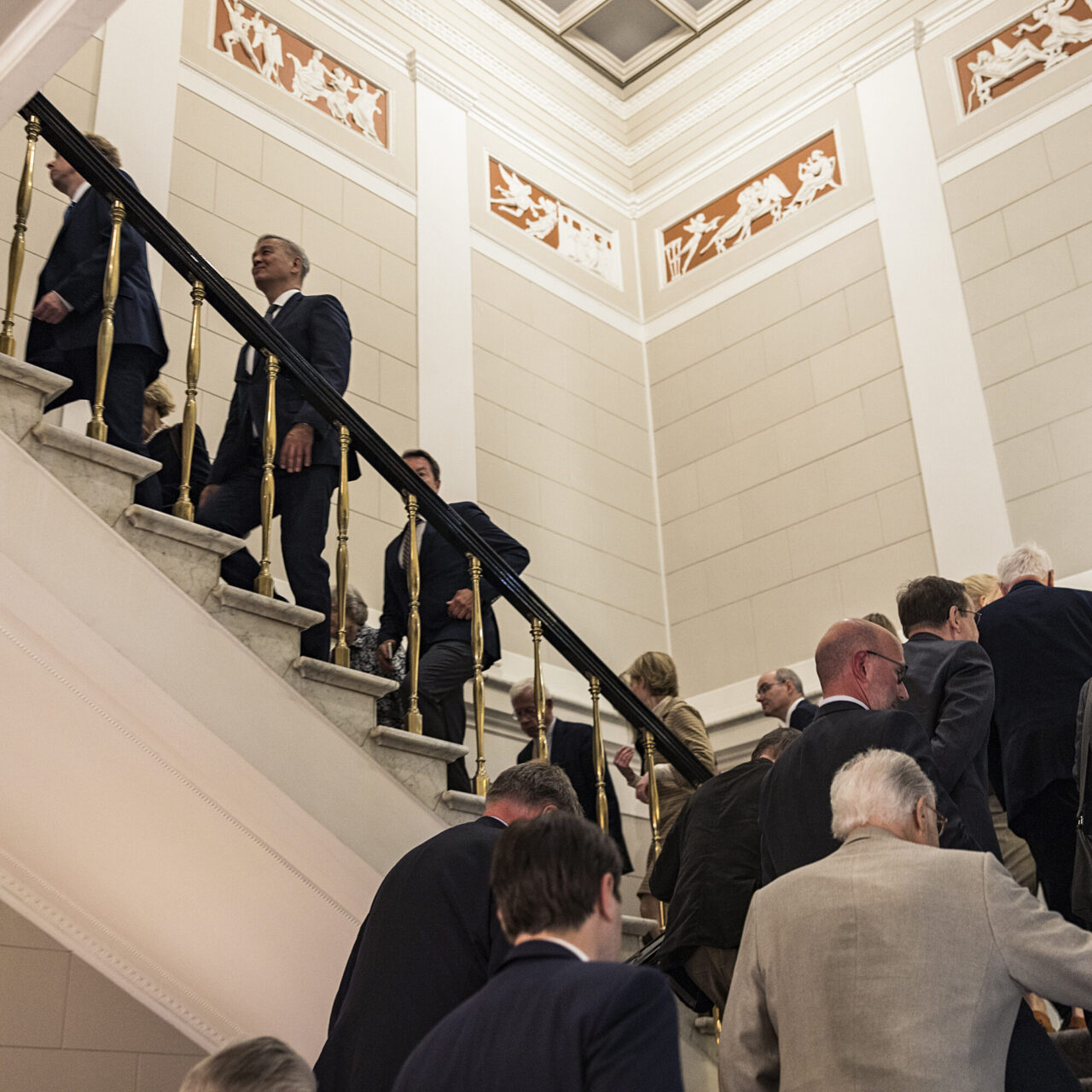
©Thies Rätzke (3)
Presidents of the Übersee-Club since 1922
Pioneers of high standards – the presidents since the club’s foundation
Since its foundation and right up to the present day, the Übersee-Club has been led by prominent figures from Hamburg’s political and business circles, who, as presidents – each in their own way – have provided the club with important impetus as it moves into the future.

1922
Dr Wilhelm Cuno
Former
Reich Chancellor; Director-General of the Hamburg-America Line

1923–1930
Franz Heinrich Witthoefft
Partner at the foreign trade firm Arnold Otto Meyer and former President of the Hamburg Chamber of Commerce

1931
Siegfried, Count von Roedern
Executive Chairman
of the Association of German Shipowners

1932–1933
Theodor Ritter
Member of the Board of Directors, Deutsche Levante-Linie
Presidents since the organisation was re-established in 1948

1948–1955
Rudolf H. Petersen
Kaufmann
, Hamburg’s first post-war mayor

1956–1957
Max Mörck
Mr Max Mörck, principal shareholder of the Nobiskrug shipyard, member of the board of Kampnagel AG, president of the Chamber of Commerce

1958–1963
Prof. Dr Rolf Stödter
John T. Essberger Shipping
Company

1964–1967
Alwin Münchmeyer
Owner of Münchmeyer & Co.
1968–1987
Prof. Dr Rolf Stödter
During Münchmeyer’s term of office, Prof. Stödter was President of the Chamber of Commerce

1988–1991
Carl-Heinz Illies
Partner in the foreign trade firm C. Illies & Co., former President of the Hamburg Chamber of Commerce

1992–1999
Dr Hellmut Kruse
Chairman of the Executive Board of Beiersdorf AG, Shareholder
Wiechers & Helm

2000–2011
Dr Peter von Foerster
Chairman of the Board of Directors of Alsen AG (Holcim AG)

2012–2023
Michael Behrendt
Chairman of the Supervisory Board
of Hapag-Lloyd AG

since 2024
Dr Harald Vogelsang
Spokesperson for the Executive Board of Hamburger Sparkasse AG
Honorary Presidents
Dr Wilhelm Cuno (deceased)
Professor Dr Rolf Stödter (deceased)
Dr Peter von Foerster (deceased)
Rudolf H. Petersen (deceased)
Dr Hellmut Kruse (deceased)
Michael Behrendt

Left: Honorary President Michael Behrendt – (President 2012 to 2023), centre: President Dr Harald Vogelsang – (President since 2024), right: Honorary President Dr Peter von Foerster (†) – (President 2000 to 2011)
©Jürgen Joost
Honorary members
Dr h.c. Henry Everling (deceased)
Dr h.c. Alwin Münchmeyer (deceased)
Erik Blumenfeld (deceased)
Sir John K. Dunlop (deceased)
Professor Dr Herbert Weichmann (deceased)
Helmut Schmidt, former Federal Chancellor (deceased)
Max Mörck (d.)
Dr Karl Klasen (deceased)