


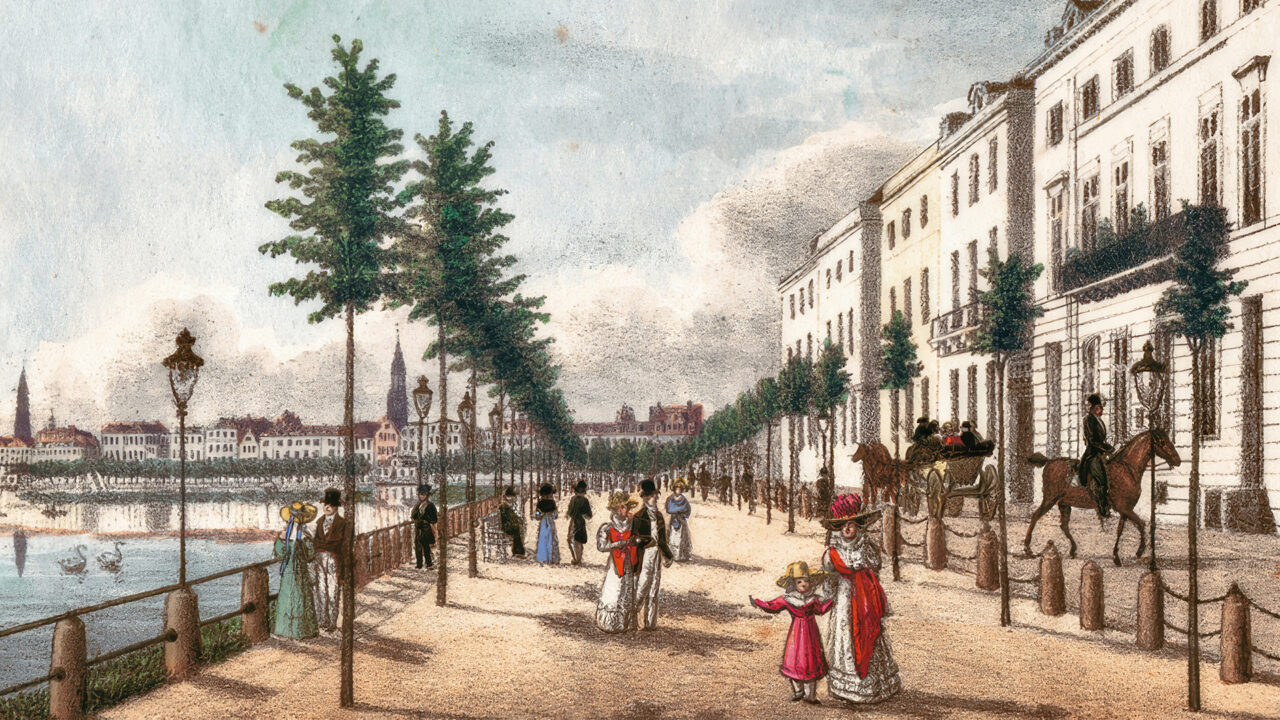
The Amsinck Palace on Neuer Jungfernstieg (lithograph by Peter Suhr, 1830).
The Amsinck House
The Übersee-Club moved out of the Amsinck-Haus at the end of July 2026, as the building’s owner is planning a comprehensive renovation.
The listed building will retain its characteristic appearance, whilst at the same time being carefully and thoughtfully modernised.
For the duration of the renovation – which, as things stand, is expected to take around two years – our club evenings will take place at various venues in Hamburg city centre.
Once the renovation is complete, the club intends to move back into the modernised Amsinck-Haus – by which time we will also have a new catering partner on board.
A gem on the Inner Alster
The Übersee-Club’s home could not be more beautiful. The Amsinck House was built at Neuer Jungfernstieg 19 from 1831 onwards, taking two years to complete. The client was Gottlieb Jenisch, a member of one of Hamburg’s great and renowned merchant families of the 19th century. It was designed and completed by the young Altona-based architect Franz-Gustav Forsmann.
This former residential and commercial building, situated in a prime location in Hamburg, still serves as a reminder of its first owner to this day: the so-called ‘Jenisch Room’ preserves the memory of Gottlieb Jenisch and the building’s early history.
Ever
since the merchant and banker Gustav Amsinck purchased the building in 1899, it has been known as the ‘Amsinck Palace’ or ‘Amsinck House’. After the First World War, the townhouse came into the possession of an insurance company, which was later taken over by Nordstern Insurance – now AXA. To this day, the building remains the property of the insurance group.
Home of the Übersee–Club since 1970
In 1969, the Übersee-Club rented the house. Thanks to generous donations from its members, the Amsinck House – which had been a listed building since 1944 – with its spacious hall and historic rooms was subsequently fully renovated, and the club moved in in 1970.
The rooms of the Amsinck House – truly impressive: the grand ballroom, with its opulent ornamentation and carved door lintels, features many elements from the period in which it was built. Two Alster Rooms overlooking the Binnenalster, the Red Salon and the Jenisch Room in the Empire style are now used as stylish dining rooms.
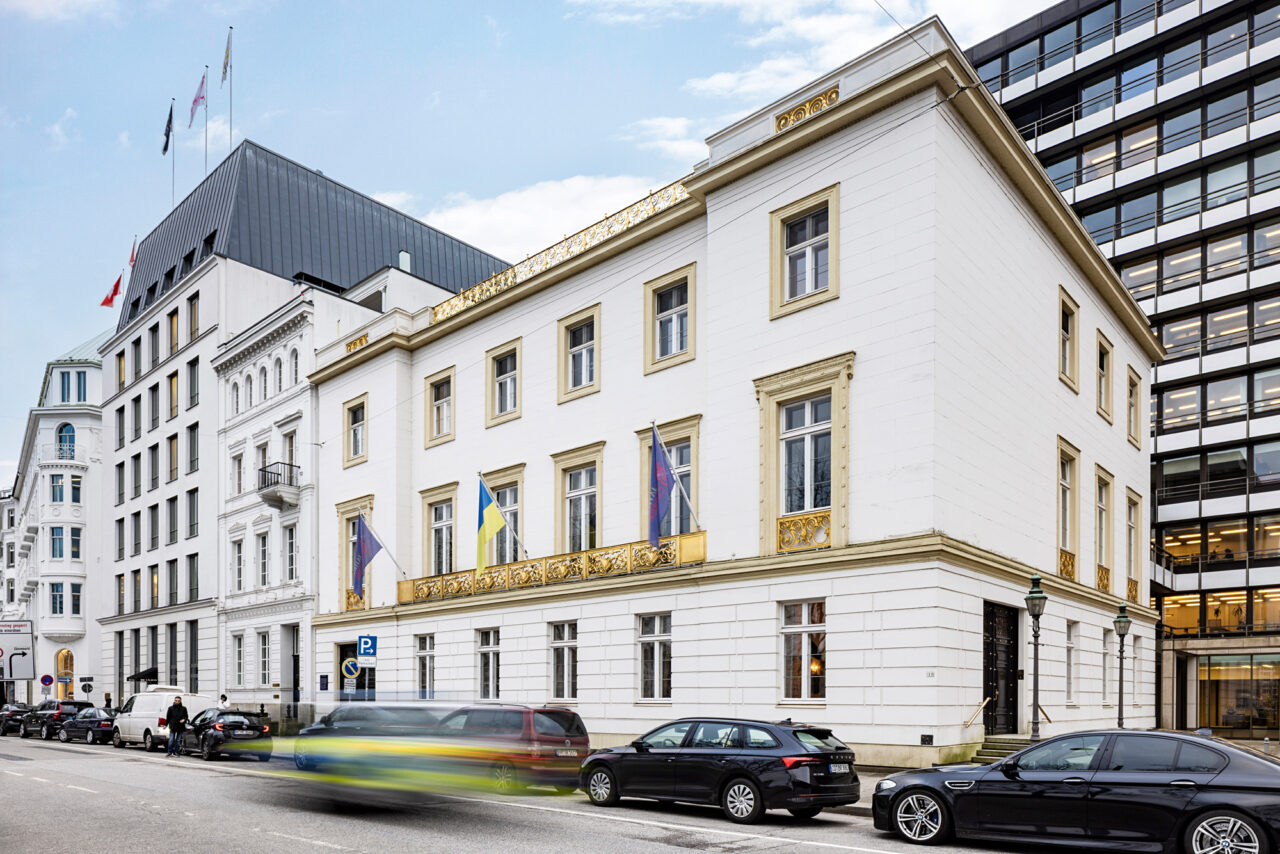
The Amsinck House – Home to the Übersee-Club on the Binnenalster in Hamburg since 1970
©Thies Rätzke
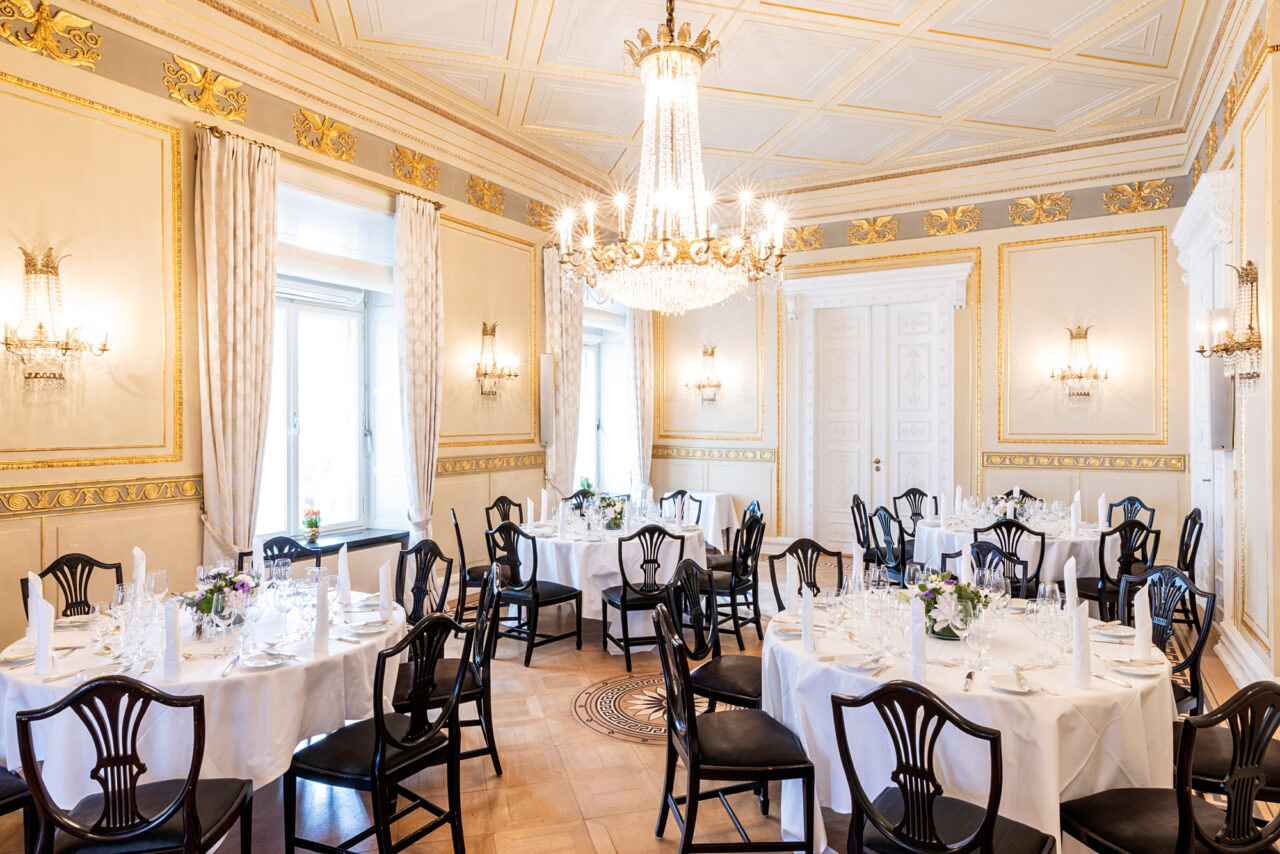
The ballroom – the jewel in the crown of the building
©Thies Rätzke
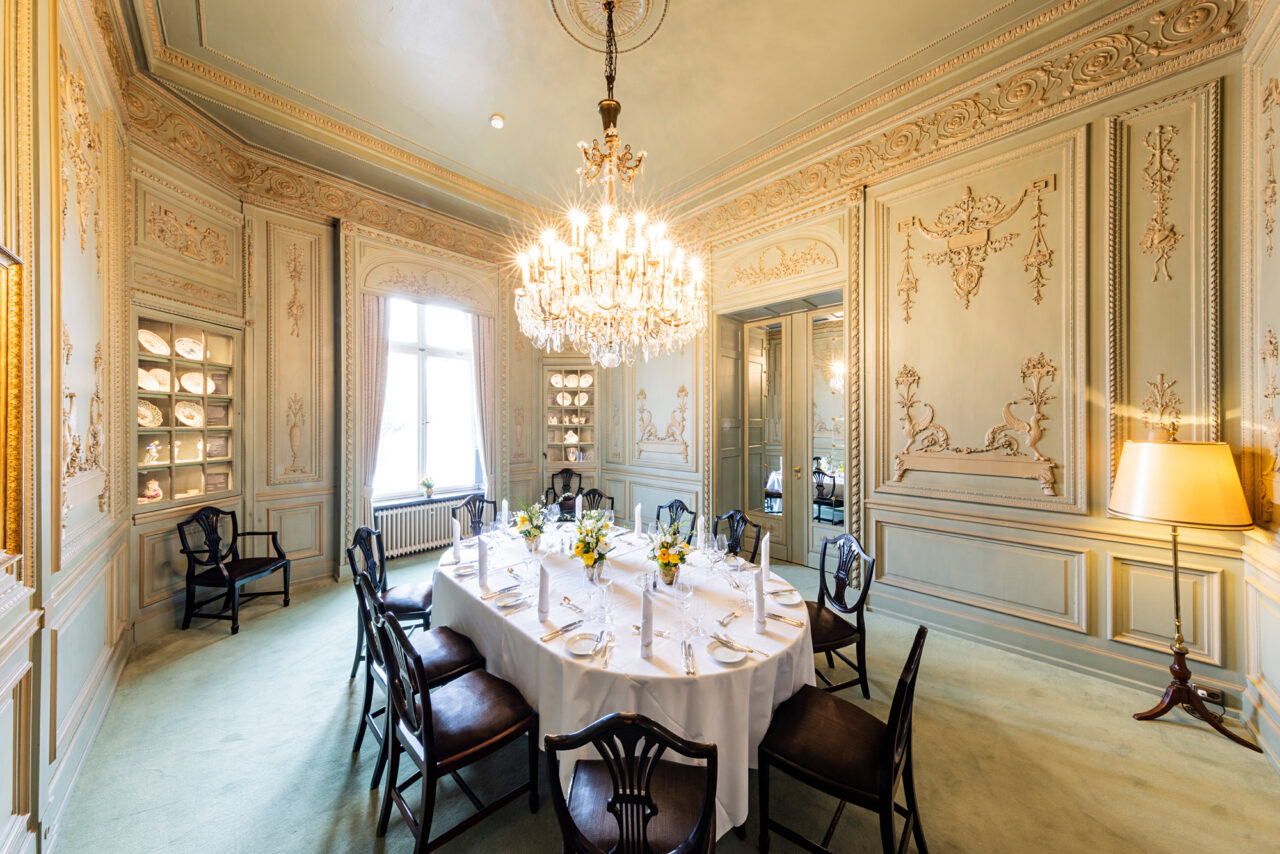
The Jenisch Room – for undisturbed conversations away from the hustle and bustle of everyday life
©Thies Rätzke
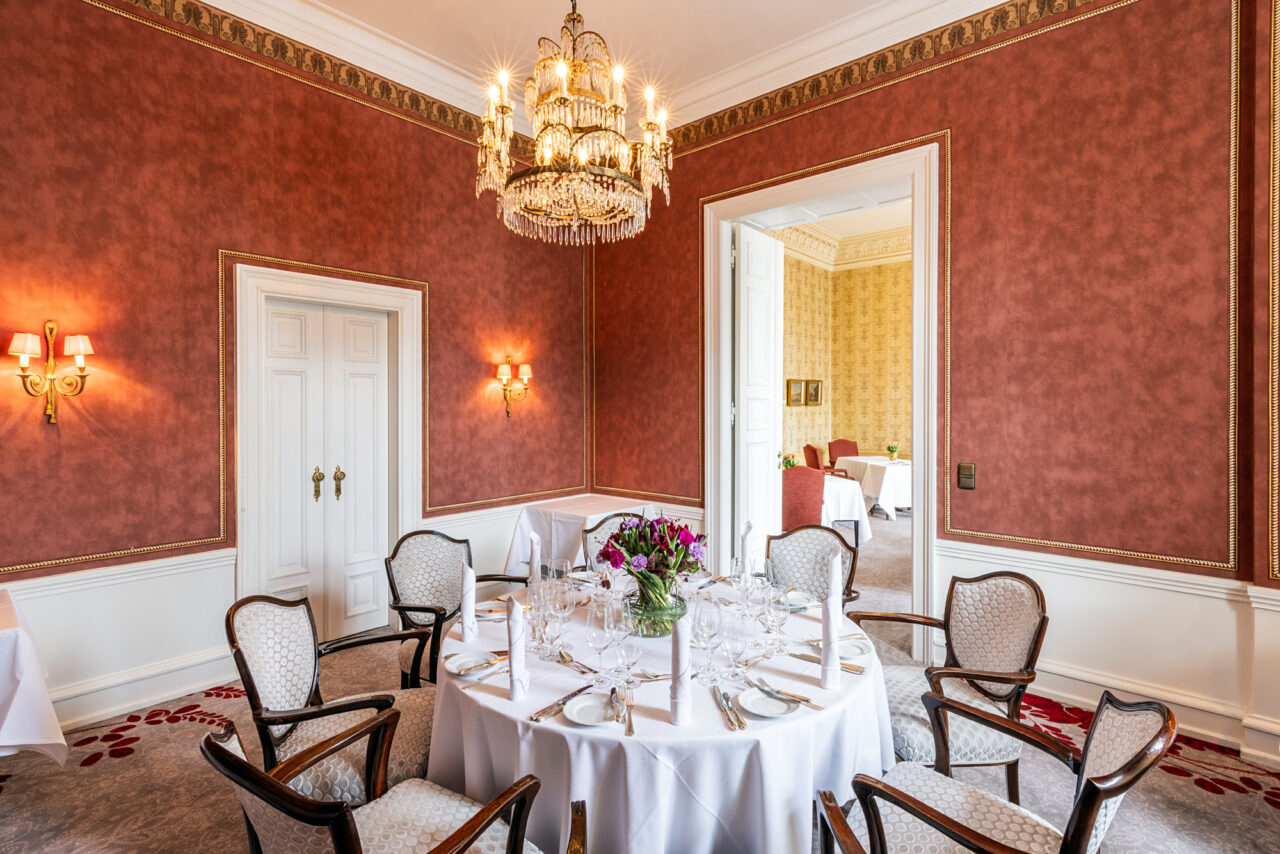
The Red Salon – an intimate space for small gatherings
©Thies Rätzke
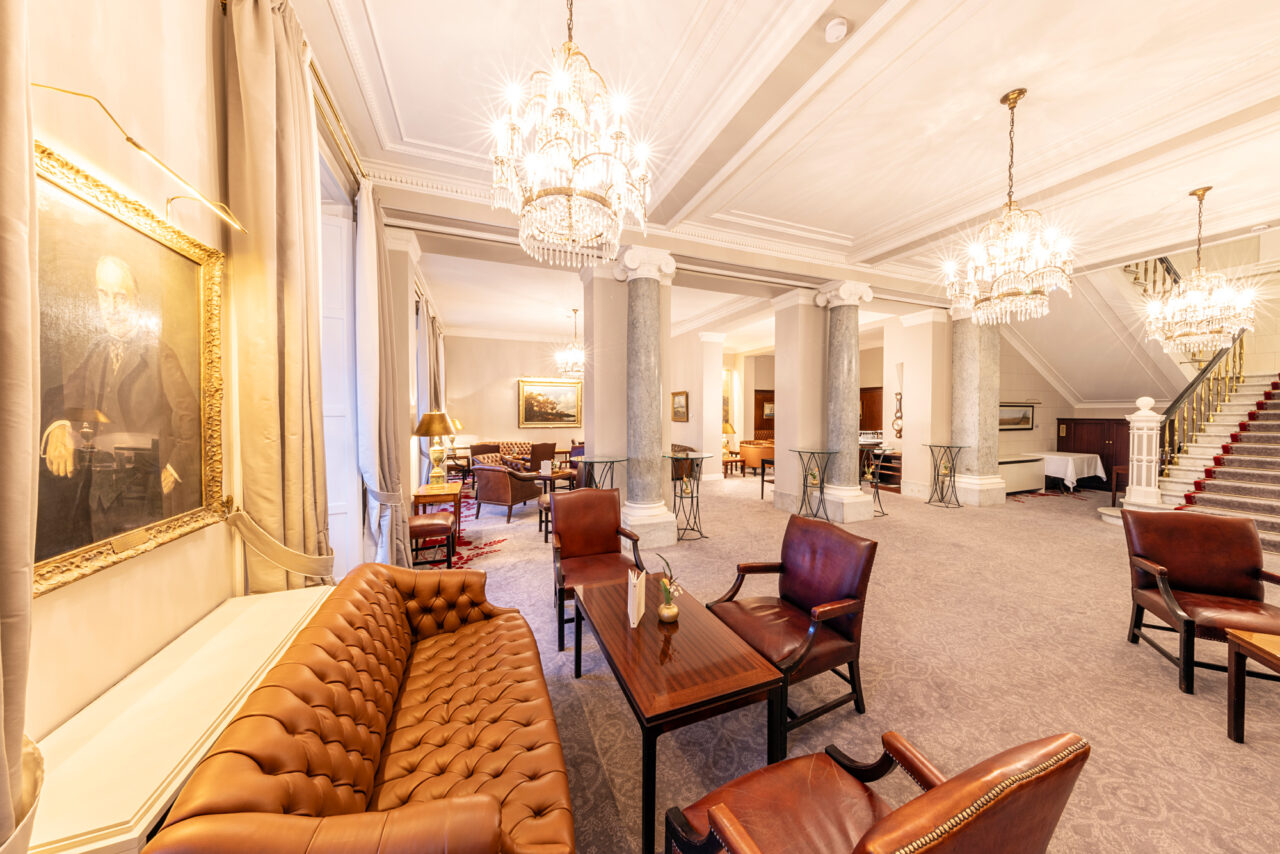
The hall – a place for meeting, dialogue and retreat all at once
©Thies Rätzke